2024-10-27
Teaching my regular classes at the Ross Farnsworth - East Valley YMCA.
Let’s talk about the Tekki katas for a minute. (I talked about this back in April, but here we go again…)
All three of them have what I call the “signature” Tekki move, starting from an inside block, transitioning through a jodan haiwan nagashi-uke/gedan-barai combination, and ending with an ura-zuki. I see this as blocking a punch to the face while bottom-fisting the attacker with the other hand, then grabbing the attacker’s clothing and pulling him into a short punch to the face. Here’s Sensei Osaka from “Best Karate, vol 5.”
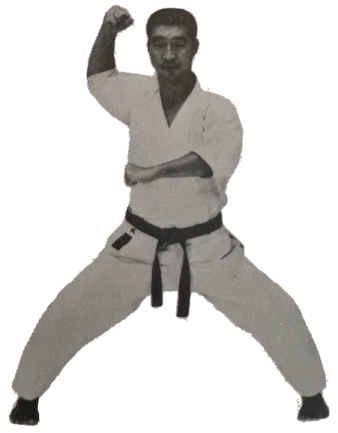
Notice the orientation of his right arm. It’s not oriented like a standard rising block, with the pinkie finger on top. Look closely, it’s oriented with the pinky down. That’s because, as it reads in the desription, this is a jodan haiwan nagashi-uke. Looky here …
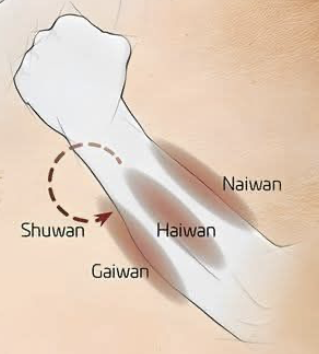
“Haiwan” is the back of the forearm and, in order to block with it, it has to be turned towards the attack, which means orienting the ulna downward as shown in the picture.
Why? Because the Tekki katas are for close-range combat. A “standard” rising block tends to parry the attack upward and away from you, but this block is meant to draw the attacker into you, while stretching his arm upward to expose his floating ribs. Try it. You’ll like it. 😈
Many people execute this like a rising block, and that’s understandable given that they’ve probably been doing rising blocks for a few years before learning the Tekki katas. Furthermore, if that’s how your sensei tells you to do it, then do it that way. Just understand that it’s a minority position. The only major Shotokan group I know who teaches it this way is the ISKF and … it’s not the only place where they diverge from the majority.
In other news, class will be cancelled on the Wednesday before Thanksgiving this year. There will be in-class announcements, but you’re hearing it here first.
🚫🥋🦃🗓️-1