2026-08-12
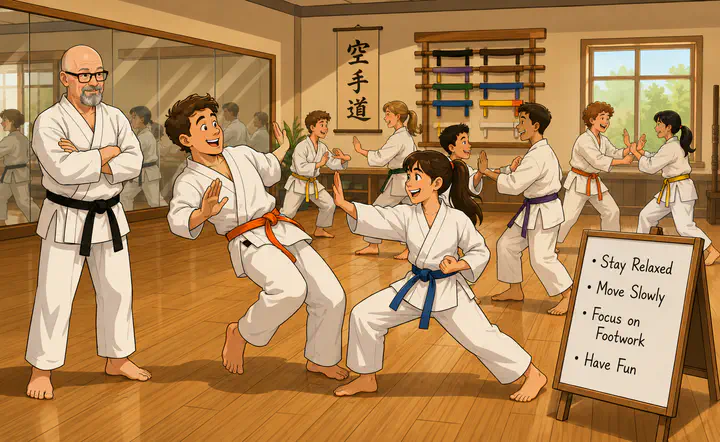
Teaching my regular classes at the Ross Farnsworth - East Valley YMCA.
I’m continuing to work toward getting people to relax during sparring because they can’t learn when they’re in panic mode. Once the startle response takes over, students stop seeing choices. They retreat in a straight line, brace for impact, and fall back on whatever movement feels safest. They may survive the exchange, but they aren’t learning much from it.
Tonight we did slow free sparring, but I told everyone they had to go comically slow, like swimming through Jell-O, and weren’t allowed to target the face. It wasn’t enough to move at half speed. Every punch and kick had to travel slowly enough for both people to watch it develop, consider the available responses, and choose one without feeling rushed. This removed most of the threat of surprise or injury. I just wanted people to have fun and learn.
As a result, nobody was panicked about anything. I even heard laughter. Of course, people sped up — they always do — and I occasionally had to remind them to slow down again. Some people even ended up going to the ground, which never happens during “normal” sparring. At ordinary speed, the participants are too concerned with being hit to spend much time exploring unfamiliar positions. At this speed, an awkward angle could become a clinch, a takedown attempt, or a scramble without either person feeling that they had lost control of the exchange.
You might question what can be learned by going that slowly, but the exercise was never really about the punches, kicks, and blocks. It was about the footwork that makes those techniques possible.
Moving slowly gave everyone time to notice where they were standing in relation to the other person. Could they move just far enough to make an attack miss instead of leaping out of range? Could they step to an angle instead of retreating straight backward? After defending, were they close enough and balanced enough to respond? If their first response put them in a bad position, could they recognize it and make a different choice during the next exchange?
Speed can conceal bad footwork. A fast student can rush through an unstable stance, skip an unnecessary step, or escape with a sudden burst of athleticism. When everything moves through Jell-O, those shortcuts become obvious. Each transfer of weight has to be deliberate, and every loss of balance lasts long enough to be felt. Slow movement also makes it possible for a partner to follow rather than simply reset, so both people learn how an exchange develops after the first attack.
Going slowly is not a substitute for sparring at realistic speed. It is a way to develop the awareness needed to handle that speed later. The students had enough time to stay relaxed, keep watching, and solve the problems in front of them. The laughter was a good sign. For once, sparring felt less like an emergency and more like play—and play is where people are willing to experiment.